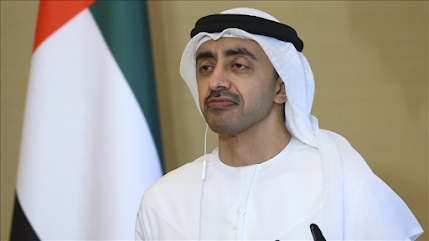
In a significant diplomatic move, the United Arab Emirates has joined a joint statement with seven other Arab and Muslim-majority states endorsing U.S. President Donald Trump’s 20-point Gaza peace plan. The UAE’s foreign ministry announced its commitment to working with the United States to end the war in Gaza, prevent forced displacement, deliver humanitarian aid, and promote a just peace based on a two-state solution.
Other countries signing the statement include Saudi Arabia, Jordan, Qatar, Egypt, Türkiye, Indonesia, and Pakistan. The joint communique welcomed Trump’s recent announcements on Israeli withdrawal, reconstruction of Gaza, prevention of annexation, and his call for unrestricted humanitarian deliveries.
The UAE’s participation marks a deeper diplomatic alignment with Trump’s initiative. UAE Foreign Minister Sheikh Abdullah bin Zayed held discussions with Israeli Prime Minister Benjamin Netanyahu, emphasizing the need to end hostilities and protect civilians in Gaza.
By speaking against any West Bank annexation and insisting that Gaza must be reintegrated under a unified Palestinian framework, the UAE signals that normalization with Israel should not come at the expense of Palestinian rights.
The UAE’s normalization with Israel under the Abraham Accords in 2020 gives it a unique position among Arab states, allowing it to influence Israeli decisions while maintaining strong connections with Arab and Muslim partners.
Trump’s plan aims for a rapid ceasefire, the return of hostages, full Israeli withdrawal, and a reconstruction program for Gaza. It also proposes a transitional governance structure overseen by an international “Board of Peace” to manage reconstruction and political transitions.
One controversial aspect is the exclusion of Hamas from governing roles unless it disarms and complies with the terms. Critics argue that the plan underestimates the political and security challenges on the ground.
The plan also includes a pathway to Palestinian statehood, but only after a sequence of reforms and reconstruction steps. This approach could test the patience of Palestinian leaders and populations enduring prolonged suffering.
Regional support is widespread but cautious. The Palestinian Authority welcomed the proposal as sincere and expressed willingness to cooperate.
Hamas, however, has not endorsed the plan and remains noncommittal. Some analysts warn that sidelining Hamas could fuel further resistance and instability.
The UAE and its joint partners emphasized that implementation is crucial. They pledged to engage constructively with the U.S. to operationalize the plan, including matters of humanitarian access, reconstruction, and security guarantees.
Yet, real obstacles remain. Israel must accept a full withdrawal without annexation. Hamas must decide whether to disarm or risk continued conflict. Reconstruction in Gaza will demand significant resources, international oversight, and local cooperation.
For the UAE, this is a delicate balance: maintaining credibility with Arab and Muslim neighbours while sustaining its normalized relationship with Israel. By joining the statement, the UAE is showing it supports negotiated peace rather than unilateral solutions.
This joint endorsement improves the chances that Trump’s 20-point plan could gain momentum, but only if critical actors take steps toward implementation. The coming days may bring shifts in Israeli politics, Palestinian responses, and international pressure to ensure the plan does not collapse.
For now, the UAE’s move marks a diplomatic milestone, signaling that it is actively participating in shaping the region’s peace architecture.
